

I have loved watching the sky since I was young. At home I had an illustrated astronomy encyclopedia, and my dream was to photograph the objects pictured in its pages. Those were different times: such images were taken by professional astronomers, and astrophotography was nowhere near as widespread as it is today.
It was only in 2021 that I finally bought my first equipment, the gear that fed my passion, and little by little I expanded it to what I use today.
The first steps
I started with a star tracker and a DSLR, first stock and then modified for astrophotography: the modification was done by the father of a friend, himself a keen photographer and astrophotographer. My first images were honestly nothing special, but the results thrilled me and made my passion grow.
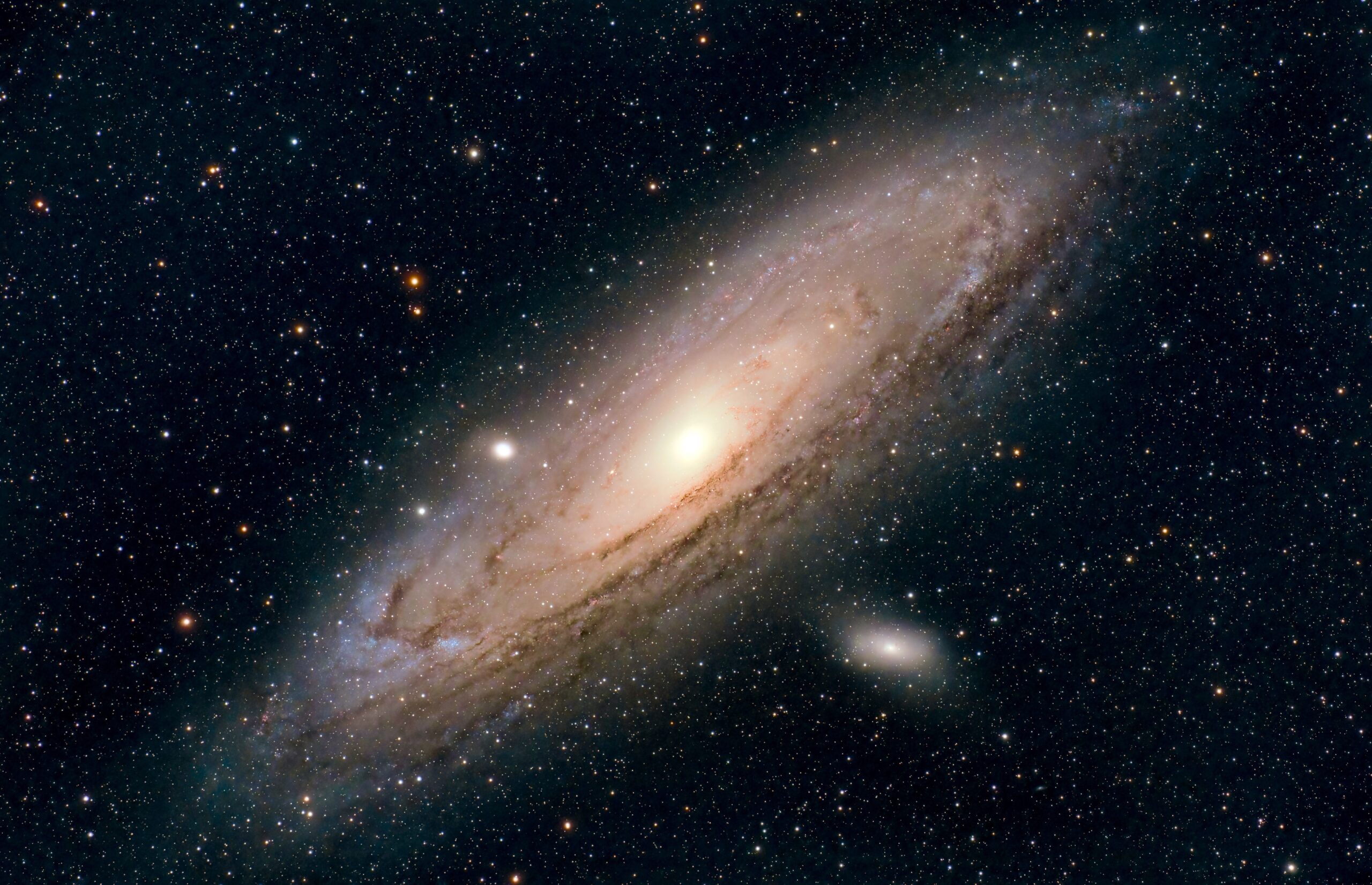
Later I bought my first equatorial mount, a Sky-Watcher EQ6-R Pro, and a small telescope, the Sky-Watcher 72ED. With this very modest setup I managed to capture what I consider my first true astronomical photograph: the Andromeda Galaxy, M31.
The Andromeda Galaxy
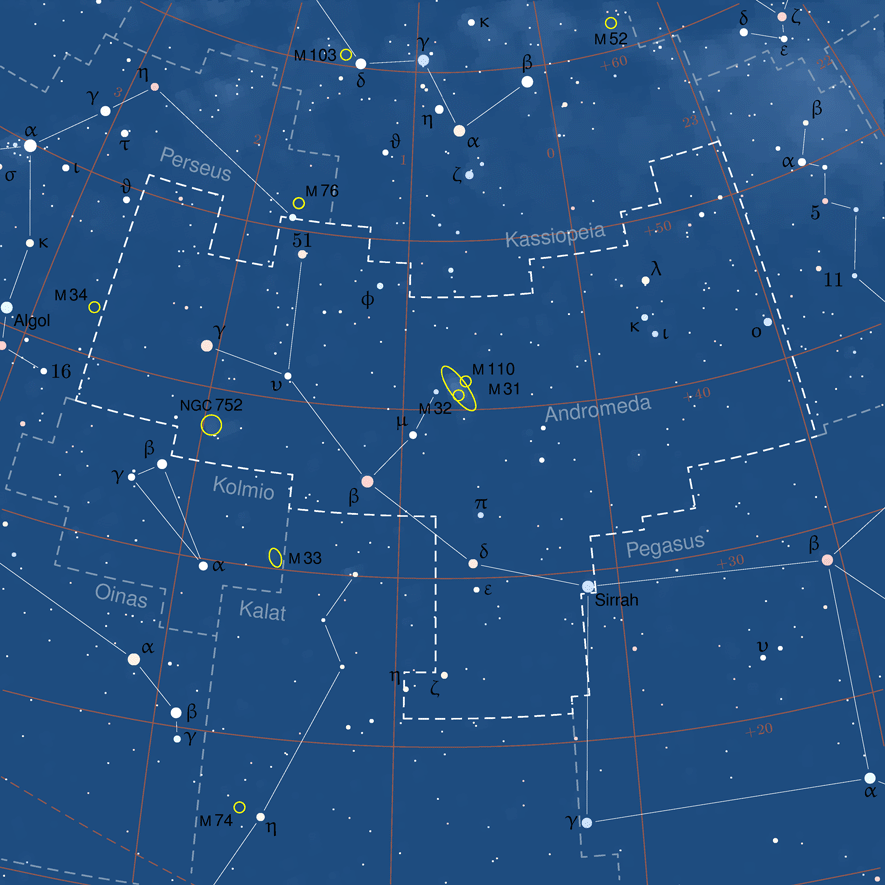
Andromeda is a very large celestial object: from the mountains it can be seen even with binoculars and, under truly dark skies, with the naked eye. It lies about 2.5 million light-years from us, in the constellation Andromeda, which is visible mainly from late summer through autumn. It is the largest galaxy in the Local Group, the set of galaxies relatively close to the Milky Way, and it is very easy to find: the mini-map below shows its position.
How are these photographs made?
It takes a lot of patience and dedication, a few frustrations and many nights of experimenting to learn how to use the equipment and the software. For anyone who wants to get started, I will soon publish the details of my gear and software: what they are for and how to use them.
The strategy is to take many photos of the same subject and then stack and process them with dedicated software. With some effort, the results can be very good. I won’t lie to you: it takes a great deal of work, but with the right patience the results will come.
Follow me
If you enjoyed this story and want to see my new shots, follow me on Instagram and AstroBin.
Leave a Reply